Blog
Why New Insurance Agents Fail and How to Build Better Habits
Learn why new insurance agents fail and build habits that last. Discover practical ways to adapt, earn client trust, handle rejection, and track daily activity.

An estimated 50% to 90% of new insurance agents leave the business within their first 12 months, depending on the research and how failure is defined. Why new insurance agents fail often comes down to more than sales ability: adapting to change, building client relationships, handling rejection, and keeping daily activity consistent all matter. The early stretch can test even agents who are committed to the work.
It’s natural to expect hard work to bring quick results. But consistent habits, thoughtful follow-up, and a willingness to adjust often matter more than one strong week or one tough call.
This article covers practical ways to build those habits. You’ll learn how to adapt to changing tools and business needs, earn client trust, handle rejection, and track daily activity so you can see what’s working and what needs attention.
Key Takeaways
- Stay adaptable as tools and business needs change; build new systems into your daily workflow instead of treating them as a one-time adjustment.
- Earn client trust through clear communication, reliable follow-up, and promises you can keep.
- Treat rejection as part of the sales process. Review your conversations, refine your approach, and keep moving.
- Track prospecting and follow-up activity each day so you can spot gaps in your pipeline before they become bigger problems.
1. Adapting to technology and business changes
Insurance workflows shift as agencies adopt new tools, carrier processes, and client expectations. Make each new system part of a repeatable routine: record prospect details, schedule follow-ups, and update outcomes in your customer relationship management system. If your CRM sits apart from your sales process, it adds steps and makes missed follow-ups harder to catch.
Captive agents generally sell for one insurer, while independent agents may represent multiple insurers. Support, expenses, and business risks depend on the contract and agency structure. Before committing, compare lead access, training, technology, compensation, and who covers business costs.
Licensing, continuing education, and insurance rules depend on your state and the products you sell. Meet the requirements for your license, track renewal and education deadlines, and follow state law changes that affect your customers.
An estimated 50% to 90% of new insurance agents leave within their first 12 months, depending on how failure is defined. Another estimate puts producer failure at 70-80% within their first 3-5 years, so build routines for adapting before setbacks compound.
New agents may need 6 to 12 months to build a client base that supports consistent income. Reaching the income level of a previous career can take 18 to 24 months, so plan for a gradual ramp rather than assuming early commissions will match a former paycheck.
Commission structures vary by contract, so understand when commissions are paid and whether payment depends on a policy staying in force. Chargebacks can reverse commissions if a policy lapses or is cancelled. Keep a reserve and review the carrier’s written terms before forecasting your income.
Be cautious of recruiting pitches that promise fast earnings but offer no clear written details about compensation, expenses, training, or lead sources. Request the contract and a realistic explanation of daily expectations before deciding. Adapting starts with understanding the system, the rules, and the numbers behind your work.
2. Building lasting client relationships
Trust comes from consistent, specific actions, not just a polished pitch. After a client conversation, record their concern, the agreed next step, and their preferred contact method. If a client asks about coverage options, follow up with the information you promised and explain any limits plainly. Reliable follow-through gives clients a reason to stay engaged.
Use the client’s preferred channel, such as phone or email, and set a specific follow-up date. Producers can schedule two face-to-face meetings per week to make relationship building part of the workweek. After each meeting, record the client’s priorities and next action in your customer relationship management system.
For existing clients, keep service personal. A short check-in can uncover a change in needs before it becomes a missed opportunity. Track conversations and reminders in a CRM, then advance your top 20 accounts every 30 days. Avoid promises you can’t fulfill; accurate expectations protect trust and reduce confusion later.
How does buying leads compare with building a client base through referrals? Referrals draw on an existing relationship, while purchased leads give agents prospects to contact as they develop their own network. Neither replaces careful qualification and follow-up. One estimate puts the close-and-conversion rate for referral business at 70%, but a referral still needs a relevant conversation and clear next steps.
Make every interaction useful. For example, ask what matters most to the client, listen without interrupting, and summarize the next step before ending the call. For clients aged 65 and over, avoid “elderspeak”; use respectful, direct language instead. These habits make communication clear and help clients feel heard.
If you need a prospecting source while building referral relationships, OTP phone-verified leads can give you people to contact. Keep your process focused on listening, accurate information, and timely follow-up.
Making promises you can’t keep can expose you to lawsuits and undermine client trust. Communicating through each client’s preferred channel, such as email or phone, helps keep expectations clear.
3. Sales skills and rejection tolerance
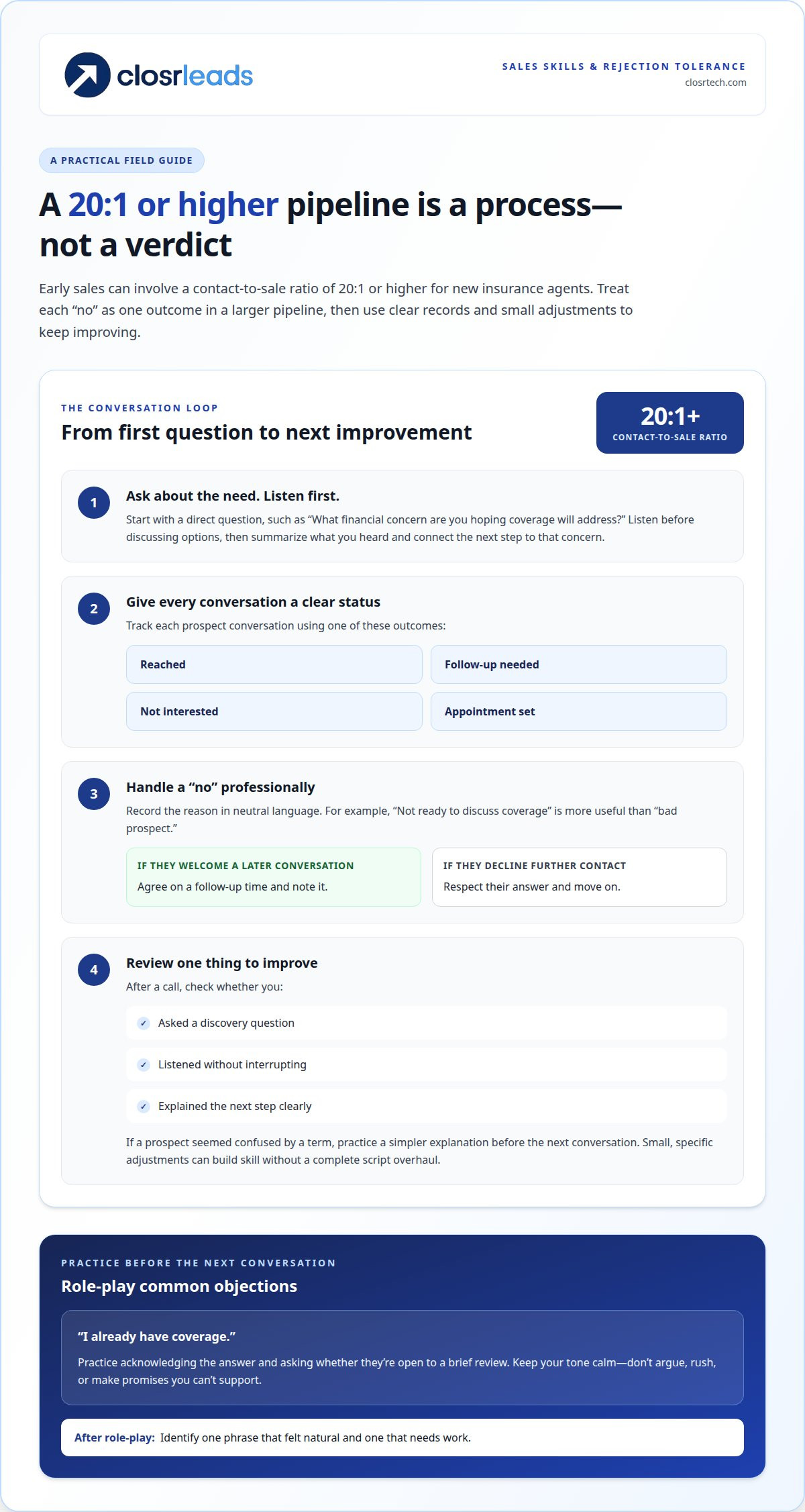
Early sales can involve a contact-to-sale ratio of 20:1 or higher for new insurance agents. A prospect’s “no” is one outcome in a larger pipeline, not a verdict on your ability. Track each conversation as reached, follow-up needed, not interested, or appointment set. Those categories help you identify whether timing, prospect fit, or your explanation needs work.
Focus each conversation on the prospect’s needs instead of relying on a rehearsed pitch. Start with a direct question, such as, “What financial concern are you hoping coverage will address?” Listen before discussing options. Then summarize what you heard and explain how the next step relates to that concern. This keeps the conversation relevant and helps prevent premature recommendations.
After a rejection, record the reason in neutral language. “Not ready to discuss coverage” is more useful than “bad prospect.” If the person welcomes a later conversation, agree on a follow-up time and note it. If they decline further contact, respect their answer and move on. Clear records help you respond professionally rather than emotionally.
Review calls with one improvement in mind. Notice whether you asked a discovery question, listened without interrupting, and explained the next step clearly. If a prospect seemed confused by a term, practice a simpler explanation before your next conversation. Small, specific adjustments build skill without requiring a complete script overhaul after every rejection.
Use role-play to practice common objections before speaking with prospects. Ask a colleague to say, “I already have coverage,” then rehearse acknowledging the answer and asking whether they’re open to a brief review. Keep your tone calm. Don’t argue, rush, or make promises you can’t support. Afterward, identify one phrase that felt natural and one that needs work.
Build resilience with a repeatable process: prepare, ask, listen, record, and review. The goal isn’t to eliminate rejection. It’s to learn from each conversation, preserve the prospect’s trust, and keep your next interaction focused and professional.
4. Daily accountability and activity tracking
Set a daily prospecting target, then record completed activity before the day ends. One practical benchmark is 15 prospecting calls per day. Track calls, conversations, appointments, follow-ups, and applications separately. The count shows where effort goes; the stages show where prospects are dropping out.
Use a simple daily log or CRM. For each prospect, record the contact date, outcome, next action, and follow-up date. Review your entries at the same time each afternoon. If calls aren’t leading to conversations, examine your call timing or opening. If appointments aren’t leading to applications, review how clearly you explain the next step.
Protect prospecting time by reserving a fixed block on your calendar. When possible, handle administrative tasks outside that block. A scheduled routine makes activity less dependent on motivation. At the end of the week, compare planned actions with completed ones, then adjust your calendar to address missed follow-ups or inconsistent outreach.
Monitor your pipeline, not just your final sales total. Agents may notice a problem only after prospecting has dried up for three months. A weekly review can reveal earlier warning signs, such as fewer new contacts, overdue follow-ups, or no appointments scheduled. Address the first visible gap, before the pipeline runs empty.
Financial discipline matters, too. Build a personal budget around essential expenses, separate personal and business spending, and track commissions as they arrive. Keep a cash reserve for uneven income, and don’t count a promising sale as income before payment clears. A steady routine supports your plan by keeping prospecting active as you build your book.
To make prospecting easier to manage, choose a consistent source of prospects and log each follow-up. Explore insurance lead options as part of a trackable outreach routine.
Reserve calendar blocks for sales activity so prospecting doesn’t get crowded out. A customer relationship management system can keep client conversations together and remind you to follow up, making the next action easier to spot and complete.
Keep the stakes in view: 80-90% of commercial insurance accounts worth winning already have an agent. Consistent tracking helps agents identify missed opportunities while there is still time to act.
ClosrLeads: Final Expense Leads
ClosrLeads offers Final Expense Leads for agents who want a defined prospecting source in their daily routine. Once your follow-up process is in place, real-time or aged leads can provide prospects to contact and help keep outreach moving. Leads are OTP-verified and TCPA-compliant, with documented consent records. The built-in dialer delivers leads into your CRM for immediate follow-up.
You can also choose Veteran Final Expense or IUL leads when those markets fit your business focus. Match your lead selection to the clients you’re prepared to serve, then track calls and next steps consistently. Leads support prospecting, but your conversations, service, and follow-through build client relationships.
To explore Final Expense Leads for your prospecting workflow, visit ClosrLeads.
Turn your next lesson into a lasting habit
Understanding why new insurance agents fail matters when it changes what you do next. Choose one skill to strengthen, put it into practice, and review what you learn. Then make your next adjustment with intention. Progress comes from repeatable decisions, not from waiting for a perfect day or flawless sales conversation.
Build a sustainable career by staying curious about your own process. Notice which actions help you serve prospects well, and keep refining the habits that support consistent work. Your experience grows through the choices you make after each conversation, setback, and success.
If you’re ready to explore lead options that fit your goals, Contact ClosrLeads to discuss your goals. Take the next step with focus, and keep building a sales practice that reflects the professional you want to become.
Frequently Asked Questions
What are the most common reasons new insurance agents fail in the United States?
Several factors explain why new insurance agents fail: inconsistent prospecting, weak follow-through, difficulty adapting to changing workflows, and expectations that outpace early results. To identify the main issue, review prospects who recently didn’t move forward. Check whether the breakdown happened at first contact, needs discovery, explanation, or follow-up. The pattern can point to a specific skill or process to improve.
What sales and prospecting skills do new insurance agents need to succeed?
New agents need to qualify prospects, ask focused questions, explain options in plain language, and agree on a clear next step. After explaining a recommendation, for example, ask the prospect to describe what they understand. This can reveal confusion before the conversation ends. Agents also need to organize outreach, respond professionally to objections, and distinguish a genuine concern from a lack of interest.