Blog
How to Fix a Low Contact Rate on Insurance Leads
Explore low contact rate on insurance leads solutions: diagnose drop-offs, improve response speed and follow-up, while contacting prospects responsibly.

More dialing isn’t always the answer. Solutions for a low contact rate on insurance leads start with separating contact problems from conversion problems, then reviewing lead type, response speed, call openings, and follow-up. Apply consumer contact rules throughout so every attempt is purposeful and responsible.
It’s frustrating when leads come in but conversations don’t follow. First, find where the process is breaking down before changing everything at once. This guide explains how to diagnose the pattern, set realistic expectations for fresh and aged leads, improve your opening, and build a practical follow-up approach. It also shows why compliant contact practices belong in the solution, not as an afterthought. Start with the numbers you already track, then make targeted changes that give each lead a clearer path to a real conversation.
Key Takeaways
- Respond to fresh inquiries promptly and track where leads drop out of your contact process.
- Set different expectations for fresh shared, fresh exclusive, and aged leads before judging performance.
- Review call openings and follow-up patterns to identify what’s stopping prospects from engaging.
- Build consumer contact rules into your outreach process, then use lead and dialer options that fit your workflow.
What Causes Low Insurance Lead Conversions?
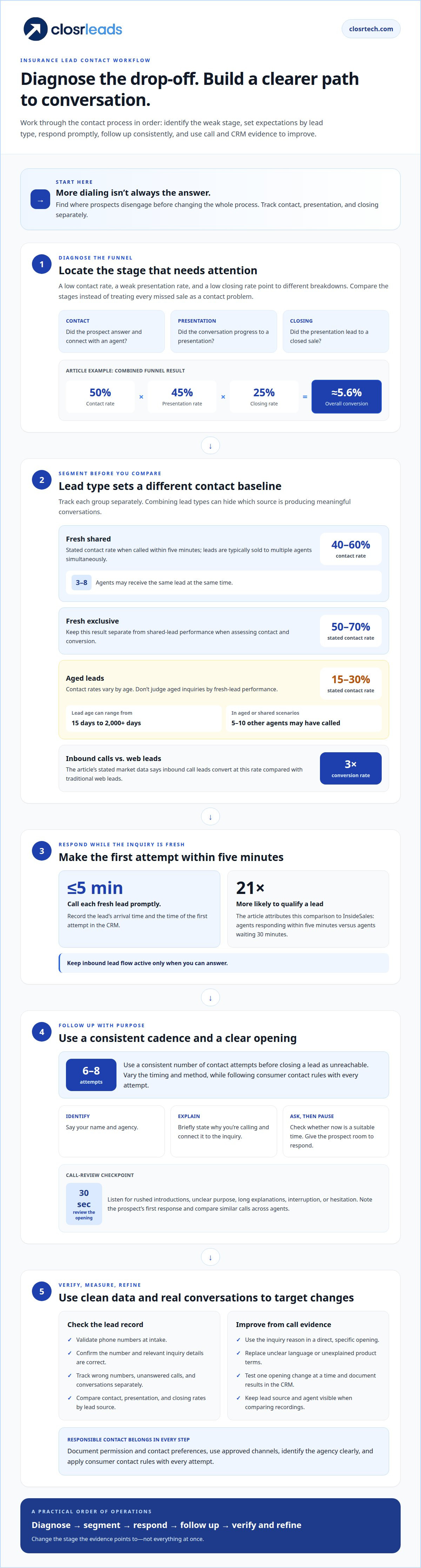
Diagnose the funnel before changing your methods. Track contact, presentation, and closing rates separately, since each points to a different breakdown. A low contact rate on insurance leads solutions plan should begin with the stage where prospects disengage.
-
Speed Up Lead Follow-Up
Call each fresh lead within five minutes, then record its arrival and first-attempt times in your CRM. Research attributed to InsideSales says agents responding within five minutes are 21 times more likely to qualify a lead than agents waiting 30 minutes. Keep inbound lead flow active only when you can answer. A CRM paired with a dialer can organize new records and log attempts, helping agents spot delays. Utilizing automated client acquisition systems, such as those provided by thefraction.com, can also streamline initial outreach and keep prospects engaged. This is a practical starting point for low contact rate on insurance leads solutions.
-
Set Follow-Up Cadence and Scripts
Use a consistent cadence of 6-8 contact attempts before closing a lead as unreachable. Vary timing and method, while following consumer contact rules with every attempt. Keep the opening brief: identify yourself, explain why you’re calling, and ask whether now is a suitable time. Review the first 30 seconds of recorded calls to spot rushed introductions, unclear purpose, or long explanations that block a meaningful conversation.
-
Verify Phone Numbers and Lead Data
Validate phone numbers at intake with a phone-verification process, then track wrong numbers, unanswered calls, and conversations separately. Confirm that each record includes the correct number and relevant inquiry details; correct data problems before increasing call volume. Compare contact, presentation, and closing rates by lead source. For example, a 50% contact rate, 45% presentation rate, and 25% closing rate produce about 5.6% overall conversion. Tie those results to commission and cost per acquisition to identify the weak stage.
Contact rates for fresh shared, fresh exclusive, and aged insurance leads
Segment each insurance lead by delivery type and age before assessing contact performance. Different lead sources and timing create different starting points for insurance agents.
- Compare fresh shared and exclusive lead results separately. Fresh shared insurance leads have a stated contact rate of 40-60% when agents call within five minutes. They’re typically sold to 3-8 agents simultaneously, so prospects may receive competing calls. Fresh exclusive leads have a stated contact rate of 50-70%. Track each group separately; combining them can hide which source generates meaningful conversations and stronger conversion rates.
- Set a separate benchmark for aged leads. Their stated contact rate is 15-30%, varying by lead age. Aged inquiries can range from 15 days to 2,000+ days old. In aged or shared scenarios, consumers may already have heard from 5-10 other agents. Open by identifying yourself and the original inquiry, then give the prospect room to explain whether life insurance remains relevant. Don’t judge an aged lead by fresh-lead performance.
- Measure inbound calls independently from web forms. In the stated 2026 market data, inbound call leads convert at three times the rate of traditional web leads. That difference can affect how you allocate lead-generation effort, but conversion still depends on agent availability, call handling, and product fit. Compare contact and closing rates by lead type, then consider premium, commission, and cost per acquisition before labeling a source profitable.
Use these comparisons to choose the lead types that fit your workflow. Explore insurance lead generation options when assessing how different lead sources may support your sales process.
Call recordings and opening strategy
Use call recordings to identify where prospects disengage. A consistent review process turns individual calls into practical improvements for your agency. Solutions for a low contact rate on insurance leads should rely on evidence from real conversations, not assumptions about consumer behavior.
- Review recorded calls and note the prospect’s first response, the agent’s opening, and any interruption or hesitation. Focus on what the consumer actually says. For example, record whether the caller recognizes the inquiry, asks for clarification, or ends the call after a lengthy introduction. Compare similar calls across agents to spot patterns that individual results may hide.
- Build a direct opening around three details: your name, your agency, and the reason for calling. For example: “Hi, this is Jordan with Greenfield Insurance. You asked about life insurance options. Is now a good time to talk?” State the purpose clearly, then pause. Give the prospect room to respond before moving into questions or product details.
- Listen for language that creates friction. A rushed script, unexplained product terms, or a question that sounds like a pitch can end an active conversation. Replace vague openings with a specific reference to the inquiry, then ask one simple question to confirm interest. If a phrase repeatedly causes confusion, revise that phrase instead of rebuilding the entire script. This makes call-review findings actionable.
- Test one opening change at a time and document the result in your CRM. Keep the lead source and agent visible beside each recording so comparisons remain useful. For example, compare calls that begin with the inquiry reason with calls that begin with a broad introduction. Check whether more consumers continue into a needs discussion, then share the strongest version across the agency for consistent delivery. This turns call review into practical solutions for a low contact rate on insurance leads, without guesswork.
TCPA compliance and consumer contact practices
Build consumer protections into every acquisition strategy. Clear records and disciplined contact practices help teams reach prospects responsibly.
-
Follow TCPA-Compliant Contact Practices
Document the permission and contact preferences associated with each prospect before outreach. Use approved channels, identify the agency clearly, and honor requests to stop contact immediately. Keep call, text, and email records together so agents can see prior interactions before reaching out. TCPA violations carry penalties of $500-$1,500 per call, making careful process control essential.
-
Set Contact Attempt Limits
Set a consistent stopping point and record each attempt by channel. Agents are advised to make 6-8 contact attempts before giving up on a lead. That guidance applies to total contact attempts, not a prescribed number of calls, texts, or emails. Don’t assume the same channel or cadence suits every prospect; follow applicable consent and contact preferences.
- Distinguish a lack of response from a request to stop. If a consumer opts out or withdraws permission, suppress further outreach through the affected channel according to your compliance process. Update the CRM promptly and make sure the record is visible to every agent handling that lead. A shared suppression process helps prevent duplicate or conflicting contact.
- Audit a sample of lead records and outreach logs regularly. Confirm that the recorded source, permission details, contact history, and opt-out status match the agent’s actions. A built-in dialer can organize lead delivery and follow-up workflow, but agents still need to use it within approved procedures. Explore a built-in dialer as part of a more controlled lead-response process.
ClosrLeads
ClosrLeads connects insurance lead sourcing with an organized follow-up workflow. Its Final Expense, Veteran Insurance, and IUL Leads give agents options across distinct insurance verticals, while the Built-In Dialer supports follow-up from the same platform. This can help when your tracking shows that lead handling, rather than call openings or contact practices, needs attention. Match lead types to the business you’re equipped to write, then use contact and conversion data to assess the fit. The dialer helps keep outreach moving, but results still depend on how agents manage each consumer conversation and follow contact rules. Explore ClosrLeads lead options to find a fit for your workflow.
Make Your Next Lead Decision Deliberate
A low contact rate on insurance leads calls for a focused decision, not a wholesale reset. Choose the weakest part of your process and change one thing at a time. Keep the rest steady long enough to see whether the adjustment improves real conversations. This discipline helps distinguish a useful fix from a short-lived fluctuation.
Turn your findings into a routine your team can sustain. Give agents a clear way to log outcomes, share patterns, and flag recurring obstacles. Use those observations to refine your lead strategy as business priorities shift. The goal is a process that stays responsive to consumers and practical for the people handling each inquiry.
If you’re ready to explore lead options that fit your workflow, start a conversation with ClosrLeads. Take the next step with a clearer view of what your team needs, and keep building a stronger path from inquiry to conversation.
Frequently Asked Questions
Bottom Line: Where Should You Start?
Start by identifying which stage loses the most prospects: delivery, contact, presentation, or closing. Compare lead records from the same source and time period, then change one process variable at a time. For example, if contact is low but presentations are strong after connection, focus first on delivery timing and phone data. This gives your team a clear, measurable starting point.
What is a good contact rate for insurance leads by lead type and channel?
A useful benchmark depends on lead type: fresh shared leads have a stated contact range of 40-60% when called within five minutes, fresh exclusive leads 50-70%, and aged leads 15-30%. The figures are not directly interchangeable. Inbound call leads are reported to convert at three times the rate of traditional web leads, but that is a conversion comparison, not a separate contact-rate benchmark.
What are the most common reasons insurance agents have low lead contact rates?
Common causes include delayed first calls, inaccurate phone details, competition for shared inquiries, and treating aged leads like new submissions. A weak opening can also turn a successful connection into a short call. Track “no answer,” “wrong number,” and “declined conversation” separately. Each points to a different fix, so combining them under one unreachable label can lead agents to the wrong adjustment.
How quickly should agents contact new insurance leads to maximize response rates?
Call a new insurance lead within five minutes whenever possible. According to InsideSales, agents responding within five minutes are 21 times more likely to qualify leads than agents waiting 30 minutes. Set up lead notifications and routing so new inquiries reach an available agent promptly. If the assigned agent can’t respond, a defined reassignment process helps prevent fresh opportunities from sitting unattended.
How do exclusive, shared, aged, and real-time insurance leads compare in contact rate and cost?
Fresh exclusive leads have a stated contact range of 50-70%, compared with 40-60% for fresh shared leads called within five minutes. Aged leads range from 15-30%, depending on age. Real-time describes delivery timing, while exclusive and shared describe distribution. Compare cost using your actual spend and contacted prospects, then assess whether each lead type produces enough meaningful conversations for your sales process.
How should agencies track contact rate by lead source and calculate cost per contacted lead?
Record each lead’s source, type, delivery time, attempt history, and outcome in your CRM. Calculate contact rate by dividing leads reached by leads received, then multiply by 100. Calculate cost per contacted lead by dividing total spend for that source by the number of leads reached. For example, separate shared and exclusive results rather than blending them into one agency-wide rate.