Blog
Best Insurance Lead Sourcing Platforms 2026: A Guide
Find the best insurance lead sourcing platform in 2026. Compare top tools with verified contacts, TCPA compliance, instant delivery, and built-in dialers.
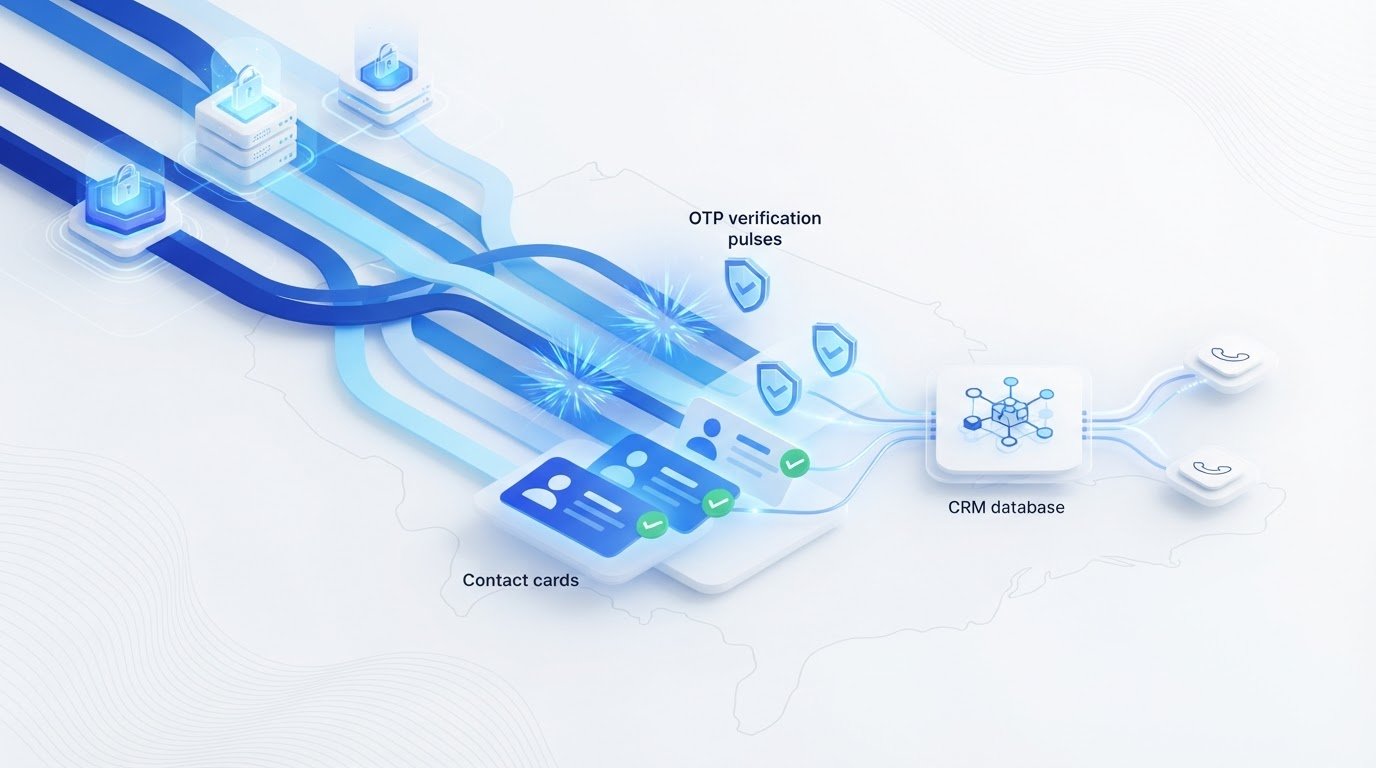
What good is a steady stream of leads if phone numbers are invalid, consent records are unclear, or prospects have moved on before you can call? The right insurance lead sourcing platform does more than fill a database. It helps verify contact details and moves each lead into your follow-up workflow quickly.
If you’re tired of chasing bad data and losing time to manual follow-up, you’re not alone. In 2026, lead quality, TCPA documentation, and delivery speed all matter. This guide compares platforms by what helps agents work leads with confidence: verified contacts, clear consent records, CRM delivery, and built-in dialing tools.
You’ll also learn how exclusive, shared, and aged leads differ, what to check before choosing a provider, and how OTP phone verification can help screen out invalid numbers. We’ll look at options including ClosrLeads, which offers OTP phone-verified leads, a built-in dialer, and a replacement guarantee for invalid contacts. The goal is to help you find a platform that supports prompt, informed follow-up.
Key Takeaways
- Choose an insurance lead sourcing platform that connects verification, consent records, and lead delivery in one workflow.
- Compare real-time and aged leads with your team’s follow-up capacity, budget, and sales process.
- Use fast delivery and a practical dialing workflow to reduce delays between receiving a lead and making contact.
- Before buying, check how the provider documents consent and handles invalid contact information.
- Explore how ClosrLeads combines OTP phone-verified leads, a built-in dialer, and a replacement guarantee for invalid contacts.
What Is an Insurance Lead Sourcing Platform in 2026?
An insurance lead sourcing platform helps identify prospective customers, verify contact details, and route lead information to an agent or sales system. The strongest platforms do more than store names and phone numbers. They connect sourcing, quality checks, and delivery so agents can act while a prospect’s interest is still fresh.
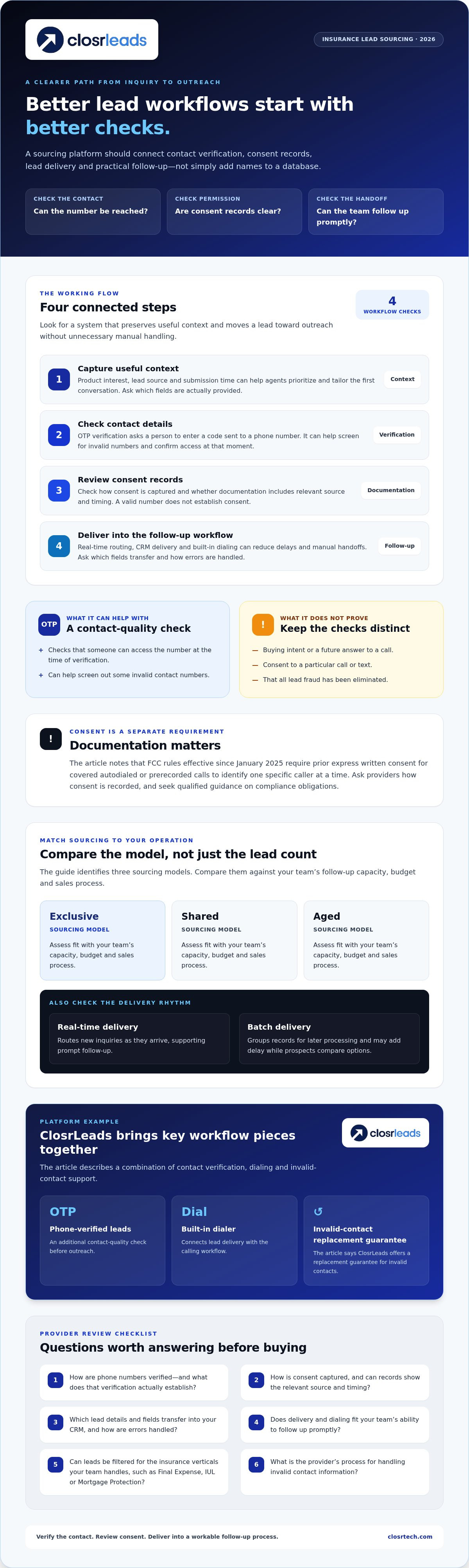
This makes the platform part of a wider lead management process: capturing an inquiry, organizing its details, and supporting timely follow-up. Useful context may include the insurance product requested, when the person submitted the inquiry, and how the lead was generated. These details help agents prioritize and tailor the first conversation. OTP phone verification can help confirm that a number is reachable, but it isn’t proof of purchase intent or a substitute for documented consent.
The Evolution of Lead Acquisition
Lead acquisition has shifted from direct-mail lists and static databases toward digital inquiries routed in real time. That changes the agent’s job: less time importing and sorting records, more focus on prompt, relevant contact. But an “exclusive” label alone doesn’t make a lead accurate, reachable, or well-documented. Verification and clear sourcing details still matter. Platforms should also support consent records appropriate to the outreach method. FCC rules effective since January 2025 require prior express written consent for autodialed or prerecorded calls to identify one specific caller at a time. Confirm how a provider records consent, and seek qualified guidance on compliance obligations.
Key Components of a High-Performing Platform
Look beyond the lead count. Assess whether the system moves information into your workflow quickly, preserves useful context, and makes follow-up practical.
- Real-time delivery: Routes new inquiries as they arrive. Batch delivery groups records for later processing, which may add delay when prospects are actively comparing options.
- CRM integration: Sends lead details into the system your team uses, reducing manual entry and helping agents track outreach. Ask which fields transfer and how errors are handled.
- Verification and consent records: OTP checks can help screen for invalid phone numbers. Look separately for accessible consent documentation and source details.
- Built-in dialing: Connects lead delivery to outreach and reduces the handoff between receiving a prospect and placing a call.
A practical test: can your team see where a lead came from, assess its relevance, and follow up without unnecessary steps? ClosrLeads, for example, combines OTP phone-verified leads with a built-in dialer. That pairing supports a workflow that moves beyond a static list to action. No platform can guarantee that a prospect will answer, but better verification, context, and delivery can help agents spend less time sorting records and more time speaking with prospects.
The Tech Stack: Must-Have Features for 2026 Sourcing
A large database won’t fix bad contact data or slow follow-up. A capable insurance lead sourcing platform should help your team verify phone numbers, review consent records, filter prospects by insurance vertical, and route new leads into its working system with minimal manual handling.
Start with the details agents need to act: product interest, lead source, submission time, and available consent documentation. Filters for Final Expense, IUL, and Mortgage Protection can help route each inquiry to the right workflow. Ask vendors which fields are included and how filters work. Don’t assume every provider captures the same information.
OTP Verification: A Useful Check, Not a Cure-All
With one-time password verification, a code is sent to a phone number and must be entered to complete the check. This can help confirm that someone can access the number at that moment and screen out some invalid contacts. It doesn’t prove buying intent, guarantee the person will answer a later call, or eliminate all lead fraud. Treat claims such as a specific reduction in wrong-number complaints as vendor claims unless they’re backed by evidence you can review.
For a closer look at what the process can and can’t establish, read about OTP-verified insurance leads. ClosrLeads offers OTP phone-verified leads, giving agents an additional contact-quality check before outreach.
Consent Records, Integrations, and Follow-Up
Verification and permission are separate checks. A valid phone number doesn’t establish that a person consented to a particular call or text. Since the FCC’s one-to-one consent rule took effect in January 2025 for covered autodialed or prerecorded calls, ask providers how consent is captured and whether records show the relevant source and timing. A vendor’s compliance claims don’t replace your own review or legal guidance.
For aged leads, check when the information was collected, what consent documentation accompanies it, and whether the record is appropriate for your planned outreach. Age alone doesn’t answer those questions. Keep an accessible audit trail and establish a process for handling opt-outs and disputes.
- CRM delivery: Confirm which fields transfer, how quickly new leads arrive, and what happens when an integration fails.
- Automated dialing: A built-in dialer can reduce manual steps between receiving a lead and starting outreach. Confirm that the calling workflow supports your compliance procedures.
- Agent responsibilities: Lead technology doesn’t replace licensing or professional obligations. FINRA offers guidance on choosing an insurance agent; consult the appropriate regulators for requirements that apply to your work.
Evaluate each feature as part of one workflow: verify, document, route, and follow up. If you’re comparing systems, explore ClosrTech’s insurance lead and dialer options alongside your CRM and compliance requirements.
Comparing Sourcing Models: Which Is Right for Your Agency?
The right lead model depends on your team’s follow-up capacity, budget, and target market. Real-time leads suit agents who can respond quickly and have a clear process for working fresh inquiries. Aged leads can support consistent outreach when agents have time and the dialing discipline to work a larger pool. Neither model guarantees conversions. Compare cost with contact quality, consent documentation, and your team’s actual results.
Consider what you’re buying, too. A database aggregator may provide broad access to records, but volume alone doesn’t tell you how recently someone expressed interest or whether contact details have been checked. A specialized delivery platform can focus on particular insurance verticals and move leads into a sales workflow. Ask providers how leads are sourced, what information accompanies each record, whether a lead is shared or exclusive, and how quickly it reaches your team.
Real-Time vs. Aged Lead Strategies
Choose real-time delivery when agents are ready to respond promptly and your process can handle incoming inquiries without a backlog. Aged leads may suit newer agents or teams building call volume, but assess the data’s age, verification, and consent records before outreach. Learn more about aged insurance leads and compare them with fresh leads using your own contact and conversion results. Sustainable growth comes from balancing volume with follow-up capacity, not simply buying the largest list.
Vertical-Specific Sourcing
Different products call for different prospect context. For Mortgage Protection leads, check whether the inquiry reflects interest in coverage tied to protecting a household’s mortgage obligations. For IUL leads, ask what indicates financial-product interest and how that context is documented. A specialized source may make filtering and routing by vertical easier than a general database, but verify the details rather than assuming a niche label means high intent.
Before committing, review the replacement guarantee. Confirm exactly what qualifies as an invalid contact, what evidence is required, and how to submit a replacement request. ClosrLeads offers a replacement guarantee for invalid contacts. It can address certain data-quality issues, but it doesn’t remove every sourcing risk or guarantee sales. A dependable insurance lead sourcing platform should make its lead type, verification process, and replacement terms clear before you buy.
Maximizing ROI: Speed to Lead and Automated Dialing
A fresh inquiry loses value when it sits in an inbox, waits for manual entry, or gets buried in a spreadsheet. Speed to lead is a workflow, not just an agent’s response time. The faster a prospect’s details reach the right person, the sooner the team can make timely, relevant contact.
Think of the five-minute rule as an operational warning: delays can make it harder to reach and qualify a prospect. It isn’t a guaranteed conversion formula. Build a process that moves new leads from arrival to follow-up with as few handoffs as possible, while respecting consent records and your approved outreach procedures.
Eliminating Lead Latency
Manual data entry adds friction. An agent has to open a record, copy details, find the right CRM fields, and remember to follow up. Each step creates room for delays and errors. Direct-to-CRM delivery can remove much of that handling by routing lead details into the system where agents already work. Set up clear alerts for new arrivals, assign an owner, and define what happens if a lead can’t be routed. Test the full path before relying on it.
The Power of the Integrated Dialer
Switching between a lead platform, CRM, and separate phone tool interrupts the sales workflow. A built-in dialer can keep lead access and calling closer together, reducing manual steps. Automated sequences should support agent follow-up, not override consent, contact preferences, or applicable calling rules. Confirm how calls are initiated and how opt-outs are handled before enabling automation.
ClosrLeads combines lead sourcing with a built-in dialer. This integration is designed to help agents move from receiving a lead to outreach without an unnecessary app switch. Results still depend on the data, timing, outreach approach, and agent execution.
To see whether the process is improving, track performance from source to close. Review metrics such as:
- Delivery time: How long it takes for a new lead to reach the CRM and assigned agent.
- First-contact time: How quickly the team attempts outreach after delivery.
- Contact and qualification rates: How often leads connect and progress to a meaningful conversation.
- Conversion by source: Which lead types and verticals move from inquiry to sale.
Use those results to adjust routing, staffing, and follow-up priorities. An insurance lead sourcing platform should help your team act quickly and assess performance by source. Explore ClosrTech’s built-in insurance lead dialer to see how lead delivery and dialing can fit into one workflow.
Why ClosrLeads Is the Authoritative Sourcing Choice
A lead source should do more than supply names. It should help agents move from prospect information to timely, informed follow-up. ClosrLeads brings together real-time and aged insurance leads, OTP phone verification, and a built-in dialer. That combination addresses three practical pressure points: unreliable contact details, delays between delivery and outreach, and the work of managing separate tools.
OTP verification can help screen for phone numbers a prospect can access, but it can’t guarantee every lead is genuine, interested, or ready to answer. It’s one quality check in a larger process. ClosrLeads also offers a replacement guarantee for invalid contacts. Review its terms before purchasing so you understand what qualifies, what documentation is needed, and how replacement requests are handled. This can help manage a defined data-quality risk, but it isn’t a promise of risk-free sales.
ClosrLeads serves customers nationally and offers leads for specific insurance needs, including Final Expense, Veteran Insurance, IUL, Trucker Insurance, and Mortgage Protection. Agents can evaluate real-time and aged options based on follow-up capacity and sales workflow. The listed agent rating of 4.98/5 provides another point of reference, though your own experience will depend on lead fit, outreach, and execution.
The ClosrLeads Advantage
For agents, the value is in reducing friction between getting a lead and working it. Phone verification adds a layer of contact validation. The built-in dialer gives agents a direct way to begin outreach without relying on a separate dialing tool. Together, these features can support a more connected process, while agents remain responsible for reviewing lead details and following appropriate contact practices.
ClosrLeads also offers aged leads, but assess each source against the factors that affect your business: lead age, contact validity, consent documentation, and performance in your own pipeline. Don’t choose on volume alone. Track how leads progress from delivery to conversation and sale, then adjust your mix using actual results.
Getting Started with Your Growth Plan
Before selecting a lead type, clarify which insurance vertical you’re targeting, how quickly your team can follow up, and how lead information should fit into your workflow. Ask about available filtering, delivery, verification, dialer use, and replacement terms. Confirm the details that matter to your process rather than assuming every feature or setup option is included.
If you’re comparing providers, assess ClosrLeads as an insurance lead sourcing platform built around verified contact data and direct follow-up tools. Scale your agency with ClosrLeads today.
Build a Faster, More Confident Lead Workflow
The strongest sourcing strategy connects lead quality with timely follow-up. Choose a provider based on more than volume: consider verification, consent documentation, lead type, delivery, and how well the workflow fits your team. Then track results from first contact through conversion to see which sources deserve more attention.
ClosrLeads brings together OTP phone-verified leads, TCPA-compliant consent records, a built-in dialer, and a replacement guarantee for invalid contacts. These features can help reduce friction, but they don’t replace your own compliance review or guarantee that a prospect will answer or buy. Check the terms and documentation so you know what you’re getting.
If you’re ready to evaluate an insurance lead sourcing platform built around verification and follow-up tools, start sourcing leads with ClosrLeads. Take the next step with a clear process, measurable goals, and a lead strategy your team can work consistently.
Frequently Asked Questions
What makes a lead sourcing platform “real-time”?
A real-time platform delivers a lead as it’s generated, rather than holding it for a later batch export. That can help an agent respond while the prospect’s inquiry is fresh. Delivery speed also depends on the provider’s process and your CRM connection, so ask how leads are routed, what information arrives with each record, and what happens if an integration or notification fails.
How does OTP verification work for insurance leads?
OTP verification sends a one-time code to the phone number submitted with an inquiry. The person must enter the code to complete the phone check, helping confirm access to the number and screen out some invalid contacts. It doesn’t guarantee the person will answer a later call, prove purchase intent, or replace consent documentation. ClosrLeads offers OTP phone-verified insurance leads.
Are the leads on your platform TCPA compliant?
ClosrLeads states that its leads include TCPA-compliant consent records. Review the documentation supplied with each lead and confirm it fits your intended outreach. A provider’s records don’t automatically ensure every call or text you make is compliant, and your team remains responsible for its contact practices. If you’re unsure how requirements apply to your workflow, seek qualified compliance or legal guidance before contacting leads.
Can I integrate ClosrLeads with my existing CRM?
ClosrLeads supports delivery of leads directly into users’ CRM systems for follow-up. Before getting started, confirm that your CRM and preferred workflow are supported, which lead fields are transferred, and how delivery issues are handled. Test the path from lead arrival through assignment and agent follow-up. A working integration can reduce manual entry, but your team should still check records and monitor whether leads reach the right people.
What happens if I receive a lead with a disconnected number?
ClosrLeads offers a replacement guarantee for invalid contacts, which may apply when a delivered lead has a disconnected number. Check the current guarantee terms to confirm what qualifies, how quickly you must report the issue, and what evidence may be required. OTP verification helps screen phone numbers, but it can’t prevent every later change in service or ensure every number remains active indefinitely.
Is there a minimum order requirement for buying insurance leads?
Confirm current purchase terms with ClosrLeads before buying. Ask whether requirements differ by lead type, such as real-time or aged leads, and whether any platform access terms apply when using the built-in dialer. Clarify your expected volume and follow-up capacity first so you can evaluate an order size your team can work consistently.
Do you provide leads for specific niches like Trucker or Veteran insurance?
Yes. ClosrLeads offers Trucker Insurance Leads and Veteran Insurance Leads, along with Final Expense, IUL, and Mortgage Protection leads. Before choosing a niche, ask what information accompanies each lead, whether it’s real-time or aged, and how phone verification and consent records are provided. Matching lead type to your products and follow-up process can help your team focus on prospects it’s prepared to serve.
How does the built-in dialer improve my agent’s performance?
A built-in dialer can reduce the steps between receiving a lead and making an outreach attempt. Instead of switching tools and manually dialing each record, agents can work leads within a more connected process. That may support more consistent follow-up, but it doesn’t guarantee higher contact or sales rates. Configure the workflow to respect consent records and contact preferences, then track activity and outcomes to assess its value.