Blog
Aged Final Expense Leads: 2026 Prospecting Guide
Convert aged final expense leads effectively. Learn proven openers, CRM tracking strategies, and a repeatable prospecting rhythm in our complete 2026 guide.

Prospecting aged final expense leads can feel less like chasing a cold list and more like following a repeatable plan. Older leads may be harder to reach, and the first conversation can feel awkward when you’re unsure how to begin. You don’t need a perfect pitch. You need a respectful opening and a clear next step.
Low response, repeated follow-up, and losing track of past conversations are common challenges. A consistent routine can make the work more manageable. This guide covers how to prepare for each contact, organize outreach, and record useful context for follow-up.
You’ll find practical opening language, a manageable prospecting rhythm, and a straightforward way to document outcomes. You’ll also learn what to review in lead and consent records before reaching out. The goal isn’t to force a conversation. It’s to make each contact thoughtfully and know what to do next.
Key Takeaways
- Treat aged final expense leads as older inquiries, not proof of current interest or readiness to buy.
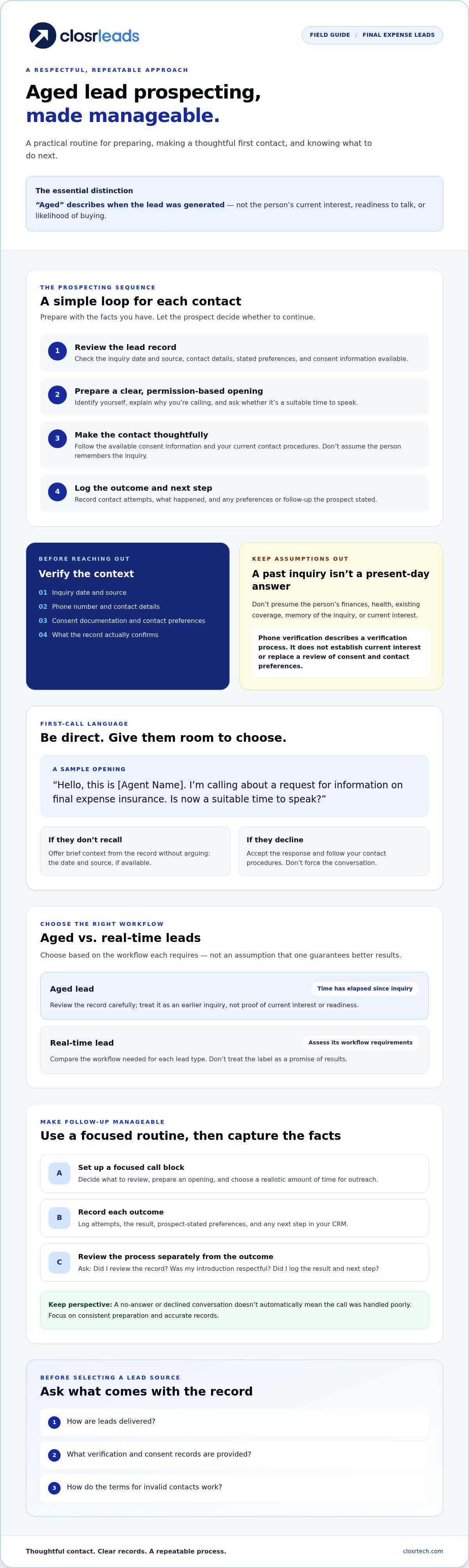
- Before calling, review the lead record, confirm its context, and prepare an opener that identifies you and asks permission to continue.
- Choose between aged and real-time leads based on the workflow each requires, not an assumption that one guarantees better results.
- Use a focused call block, log each outcome, and record contact attempts and prospect-stated preferences in your CRM.
- Before selecting a lead source, ask how leads are delivered, what verification and consent records are provided, and how invalid-contact terms work.
Why aged final expense leads can make prospecting feel harder
An older inquiry can make you pause before picking up the phone. You may wonder whether the person remembers requesting information, whether the details still apply, or how to begin without sounding abrupt. That uncertainty is understandable. Time has passed, and the record may not show what the prospect wants today.
An aged final expense lead is a record of someone who previously expressed interest in information about final expense coverage, with time elapsed since the inquiry. “Aged” describes when the lead was generated, not the person’s current interest, readiness to talk, or likelihood of buying. Final expense policies are a form of life insurance, but an earlier inquiry alone doesn’t establish whether a particular policy fits someone’s current needs.
Focus on what you can control: review the available record, prepare a clear introduction, and document what happens. You can’t predict whether the person will answer or want to continue. Treat each call as one step in a process, not a verdict on your ability or the value of the lead.
What makes an aged lead feel different to contact?
There may be a gap between the inquiry and your call. The person’s circumstances or priorities may have changed, or they may not recall the original request. Don’t fill in those blanks for them. Before reaching out, check the available source, inquiry date, contact details, and consent information. If the record lacks context, avoid implying more than it confirms.
Keep assumptions out of the opening, too. Don’t presume the prospect’s finances, health, existing coverage, or memory of the inquiry. Introduce yourself and explain why you’re calling, then give them room to say whether they’re open to a conversation.
How to reframe prospecting anxiety into a process
Hesitation is a cue to prepare, not to overpromise. Before a call block, decide what you’ll review, choose a simple opening, and set a realistic amount of time for outreach. A short, focused block gives you a clear starting point without requiring perfect confidence or an oversized daily target.
After each call, assess the process separately from the outcome. Did you review the record? Was your introduction respectful? Did you log the result and any next step? A no-answer or declined conversation can feel discouraging, but it doesn’t automatically mean you handled the call poorly. Consistent preparation and accurate recordkeeping give you a steadier basis for improving your approach to aged final expense leads.
How to prepare for a respectful first call on an aged final expense lead
A clear preparation sequence takes pressure off the opening. Review the record, confirm the context and contact details, and plan a brief introduction. Reach out only in line with the available consent information and your current contact procedures. This keeps the conversation grounded in what you know, not what you assume.
A respectful first call is a permission-based conversation that gives the person a clear reason for the call and room to decide whether to continue.
What should agents check before calling?
Start with the details available for that specific inquiry. Check its submission date and source, the phone number, any contact preferences, and the consent documentation supplied with the record. Follow your organization’s current procedures for reviewing that information before outreach. The FTC’s Telemarketing Sales Rule resource is a useful reference for understanding telemarketing requirements. Use it alongside applicable guidance and your organization’s procedures.
Phone verification can help confirm that a number was verified through a particular process. It doesn’t establish that the person is interested today, remembers the inquiry, or agreed to every contact method. Review what the record actually documents. One verification step isn’t a substitute for checking consent and contact preferences.
What can an agent say in the opening?
Keep the introduction direct and easy to understand. Identify yourself, give the insurance-related reason for the call, and ask whether it’s a suitable time before moving into questions. For example:
“Hello, this is [Agent Name]. I’m calling about a request for information on final expense insurance. Is now a suitable time to speak?”
This acknowledges the earlier inquiry without suggesting the person remembers submitting it. If they say they don’t recall, offer brief context without arguing: “The record I have shows a request for information submitted on [date] through [source]. Does that sound familiar?” If they’re not interested or don’t want to continue, accept the response and follow your contact procedures. A calm exit protects trust and keeps the call respectful.
Before working a batch of aged final expense leads, use the same quick checks each time. Preparation won’t control who answers, but it can make your opening clearer and your decisions easier to document. If you’re evaluating lead options, review the available aged final expense lead details and confirm what consent information accompanies the records.
Aged versus real-time final expense leads: choose a workflow, not a promise
The practical difference between aged and real-time final expense leads is when the inquiry was submitted and how your team organizes outreach around that timing. Neither label proves a prospect is interested now, reachable, or likely to purchase. Choose based on the follow-up process you can consistently support, not an assumption that one type guarantees better results.
Use this comparison to assess the work involved. Confirm the details and contact permissions for the specific records you receive.
| Lead type | Preparation needs | Follow-up approach | Questions to verify |
|---|---|---|---|
| Aged | Review inquiry date, source, contact preferences, and available consent information. | Schedule focused call blocks; document each attempt and next step. | How old are the records? What context and consent documentation come with them? |
| Real-time | Have a process ready to review and respond when a new inquiry arrives. | Prioritize prompt handling, then record the outcome and any agreed next action. | How is delivery handled? What verification and consent details are provided? |
When might an aged-lead workflow suit an agent?
Aged records may fit agents who prefer planned outreach over reacting to each new inquiry as it arrives. A set call block and organized follow-up list can make the workload easier to manage. Before choosing this approach, assess your available time, how many records you can work carefully, and whether you can maintain follow-up. Aged timing alone doesn’t establish value or potential.
When does real-time delivery change the process?
With a new inquiry, the workflow needs to account for prompt response. That differs from scheduling calls to older records, where the first task is reviewing what the record says and setting an appropriate next step. Consider whether your daily routine can support immediate attention as well as follow-up documentation. Verification is one factor to review, not a substitute for checking what the record supports. For more on that distinction, see this OTP-verified insurance leads guide.
For broader context on lead types and evaluation, read the final expense leads guide. Compare each option against your capacity, recordkeeping habits, and ability to follow through. The strongest fit is the workflow you can run consistently and respectfully.
How to build a steady prospecting routine and manage follow-up
A routine turns a long lead list into manageable actions. For aged final expense leads, keep the sequence simple: prepare the records, work a focused call block, log each result, then schedule only appropriate next steps. Repeat the process at a pace you can sustain.
Measure the work you control. Track whether you completed the planned call block, reviewed the records, and entered clear outcomes. Don’t use one day’s response or sales results as the only measure of whether your process is working.
How can agents follow up without losing context?
Update the CRM after each interaction, while the details are fresh. Include the date, outcome, relevant notes, and any next step the prospect agreed to. Record contact attempts and prospect-stated preferences so a later task doesn’t erase the context of the last conversation.
Set reminders only when they align with the available consent information, applicable requirements, and your company’s procedures. If someone declines or asks not to be contacted, follow the appropriate process to stop or adjust outreach and update the record. A reminder should never override a person’s stated preference.
How can a dialer and CRM reduce friction?
Connected lead delivery, a dialer, and CRM records may reduce manual switching between tools and help keep calls and follow-up organized. ClosrLeads offers a built-in dialer and real-time lead delivery into users’ CRM systems. Software can support consistent recordkeeping, but it can’t decide whether a contact is appropriate or replace your review of consent and internal procedures.
Adapt this checklist to your own compliant operating procedures:
- Prepare: Review the lead record and available contact information.
- Call: Work one focused block using your planned opening.
- Log: Record the attempt, outcome, and relevant prospect preferences.
- Schedule: Add a next action only when appropriate and permitted.
- Review: Check completed blocks and record quality, then adjust the routine if needed.
Start with a workload you can complete consistently, then refine the process based on accurate records. To explore lead options that fit this kind of organized workflow, review aged final expense leads.
Turn aged final expense lead prospecting into a manageable next step
Make the next move simple. Review the lead details, choose a focused call block, and track what happens after every attempt. That routine won’t control whether someone answers or wants to talk. It will help you work aged final expense leads consistently and keep the context you need for appropriate follow-up.
What should agents verify before choosing a lead source?
Ask specific questions before you commit to a source. What information accompanies each lead? Can you review the inquiry date, source, and contact preferences? How are consent records supplied, and what do they document? Clear answers help you assess whether the records provide enough context for your process.
Also ask for the current terms that apply to invalid contacts, including eligibility and any required steps. Don’t rely on a general reference to a replacement guarantee without understanding its conditions. Finally, check whether lead delivery and any included tools fit the systems you already use. A workflow that looks useful on paper still needs to work with your recordkeeping and outreach procedures.
How can ClosrLeads support an organized workflow?
ClosrLeads sells aged insurance leads, including final expense leads. Its leads are OTP phone-verified and include TCPA-compliant consent records. The platform includes a built-in dialer and can deliver leads into users’ CRM systems. These features may help organize lead handling and call records, but they don’t determine whether a specific contact is appropriate or replace an agent’s review of the records.
Before outreach, review the available consent information and follow your organization’s procedures and applicable requirements. Verification and documentation are important details to examine, not a promise of current interest or a particular result. Keep your expectations grounded in the individual record and the prospect’s response.
Use these questions to guide your evaluation:
- What lead details and consent records will I receive, and how can I review them?
- What are the current eligibility criteria and steps for invalid-contact replacements?
- Can lead delivery and the built-in dialer fit my existing workflow?
- Can I consistently record outcomes and manage appropriate next actions?
Start with one manageable call block, then use the results to assess your process and workflow fit. To review the available features and lead options, explore ClosrLeads lead options. Focus on clear records, respectful outreach, and follow-up you can manage.
Make your next prospecting block count
Aged final expense leads are a prospecting input, not a promise of current interest or a sale. A stronger approach is repeatable: review each record, open respectfully, and log the outcome so any next step has context. Choose a workflow you can manage consistently, then judge your process by the actions you control.
When comparing lead options, check what information and consent records are provided, how delivery fits your routine, and whether the available tools support organized follow-up. ClosrLeads leads are OTP phone-verified and include TCPA-compliant consent records. The platform includes a built-in dialer and CRM delivery. Backed by strong agent satisfaction, these leads are designed to integrate seamlessly into your daily outreach routine.
Ready to review the available options and see how they may fit your workflow? Explore ClosrLeads lead options. Start with a manageable call block, keep your records clear, and build consistency one thoughtful contact at a time.
Frequently Asked Questions
What are aged final expense leads?
Aged final expense leads are records of people who previously submitted an inquiry about final expense insurance, with time elapsed since submission. “Aged” describes the timing of the inquiry, not the person’s current interest or readiness to buy. Before outreach, review the record’s available date, source, contact preferences, and consent details. Treat each lead as a starting point for a respectful conversation, not proof of intent.
Are aged final expense leads worth working?
They may be worth working if their follow-up needs fit your time, process, and capacity. Lead age alone can’t establish whether someone is reachable, interested, or likely to purchase. Start with a manageable call block, track attempts and outcomes, and review whether your process is sustainable. Compare results over time using your own records, but don’t treat a single call or a lead’s age as a reliable forecast.
How do you call an aged final expense lead?
Review the lead record and available consent information before calling. Identify yourself, explain the insurance-related reason for the call, and ask permission to continue before asking qualifying questions. For example: “Hello, this is [Name]. I’m calling about a request for information on final expense insurance. Is now a suitable time to speak?” If the person doesn’t recall the inquiry, offer brief context without insisting they remember.
How often should an agent follow up with an aged lead?
There isn’t one appropriate follow-up schedule for every aged lead. Base next steps on the record, the prospect’s stated preferences, applicable requirements, and your organization’s procedures. Log each attempt and conversation in your CRM. If someone declines or asks not to be contacted, update the record and follow the process for honoring that request. Don’t keep repeating outreach just because a lead remains on a list.
Are aged final expense leads TCPA compliant?
Lead age alone doesn’t determine whether a record or a specific contact method meets applicable requirements. Ask the provider what consent documentation accompanies each lead, how you can review it, and what contact scope it supports. ClosrLeads’ leads are OTP phone-verified and include TCPA-compliant consent records. Agents should still review the documentation and follow their own compliance procedures before contacting a prospect.
How can agents reduce anxiety when prospecting aged leads?
Turn the call into a sequence of actions you can control. Review the record, prepare a simple opener, and set a realistic call block instead of waiting to feel perfectly confident. After each attempt, record the outcome and assess whether you followed your process. A no-answer or decline isn’t automatically a sign you handled the call poorly. Keep the conversation respectful and let the prospect decide whether to continue.
What should I look for in an aged final expense lead provider?
Check what information comes with each lead, including its timing, source, contact preferences, and consent documentation. Ask how verification works and how consent records are made available for review. Confirm current eligibility criteria and steps for any invalid-contact replacement terms. Finally, assess whether delivery fits your existing workflow and whether tools such as a built-in dialer or CRM delivery can support organized follow-up without replacing your own judgment.